Media & Journalism
Landmark
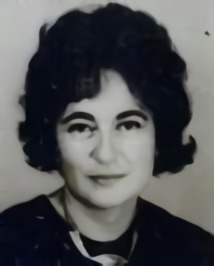
Ruth First
1925 – 1982
Journalist and scholar, assassinated by a parcel bomb
Landmark is level 2 of 4 in the South Africa Hall of Fame: a first that opened a door, or the pre-eminent figure of their generation in this country. See how the levels work.
Why they are here
An investigative journalist and scholar whose reporting exposed the conditions of Black labour, killed in exile by a parcel bomb built by the South African police.
Heloise Ruth First was born in Johannesburg to Latvian Jewish immigrants who were founding members of the South African Communist Party, and edited the left-wing papers The Guardian and New Age through the 1950s.
Her reporting is what distinguishes her. She went out and documented the farm labour system in the Bethal district of the Eastern Transvaal, where men recruited under false pretences were worked on potato farms in conditions close to slavery and beaten, and the exposé produced a national boycott of potatoes. She reported the bus boycotts, the mine compounds and the conditions in the reserves, at a time when the mainstream press treated none of it as news.
She was among the accused in the Treason Trial, and in 1963 was detained for one hundred and seventeen days under the ninety-day law, much of it in solitary confinement, without charge — an experience she wrote as 117 Days, one of the essential accounts of detention under apartheid.
She left for Britain, taught at Durham, and moved to Maputo as research director at Eduardo Mondlane University, where her work on migrant labour in southern Africa is still cited. On 17 August 1982 she opened a parcel bomb at her desk and was killed. It had been sent by the South African security police; the officer responsible later applied for amnesty at the Truth and Reconciliation Commission, which refused it.
Her reporting is what distinguishes her. She went out and documented the farm labour system in the Bethal district of the Eastern Transvaal, where men recruited under false pretences were worked on potato farms in conditions close to slavery and beaten, and the exposé produced a national boycott of potatoes. She reported the bus boycotts, the mine compounds and the conditions in the reserves, at a time when the mainstream press treated none of it as news.
She was among the accused in the Treason Trial, and in 1963 was detained for one hundred and seventeen days under the ninety-day law, much of it in solitary confinement, without charge — an experience she wrote as 117 Days, one of the essential accounts of detention under apartheid.
She left for Britain, taught at Durham, and moved to Maputo as research director at Eduardo Mondlane University, where her work on migrant labour in southern Africa is still cited. On 17 August 1982 she opened a parcel bomb at her desk and was killed. It had been sent by the South African security police; the officer responsible later applied for amnesty at the Truth and Reconciliation Commission, which refused it.
Spotted something wrong? Tell us and we will check it.